Rinvera Modüler Mobilya
We don't just manufacture furniture; we bring comfort and aesthetics to your living spaces according to high industry standards.

We don't just manufacture furniture; we bring comfort and aesthetics to your living spaces according to high industry standards.

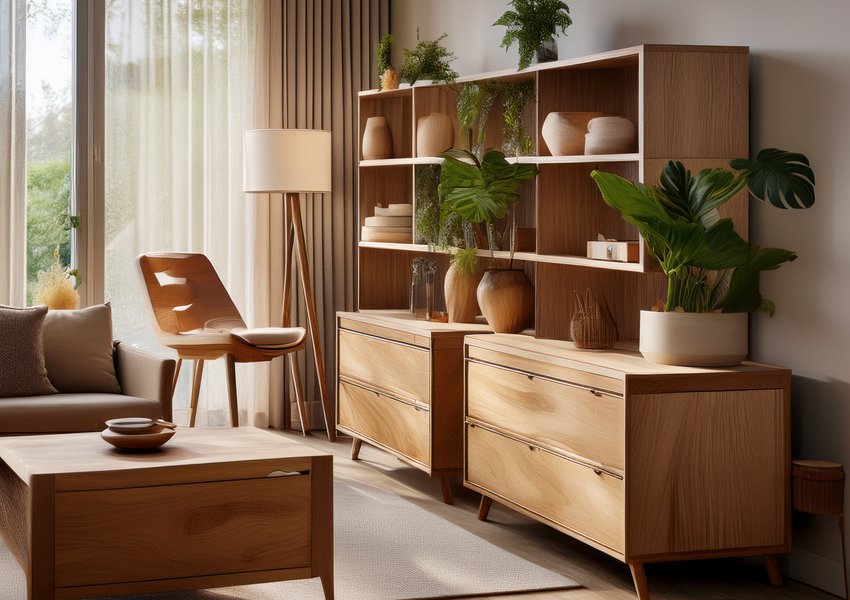
Solid wood furniture is 100% natural furniture obtained by cutting the tree from the log form and processing it directly without the use of any synthetic filling, MDF, chipboard or veneer6.
Since it does not contain artificial materials, it literally brings the naturalness, grain texture and warmth of wood to the living space.
Highlights:
Every Piece is Unique: Since it is made of natural logs, no solid furniture will have the same grain, knotty structure or color tone as another.
High Durability and Longevity: With proper care, it can be used for generations. It is much more resistant to impacts and load-bearing compared to treated panels such as MDF or chipboard.
Sandable and Renewable: If its surface develops scratches or wear over the years, it can be easily restored to its original state by sanding and re-oiling or varnishing.
It is a Living Material (Breathable): It reacts to humidity and temperature changes in the environment. It may shrink slightly in very dry environments and expand in high humidity; this is an indication of the naturalness of the wood.
Healthy and Environmentally Friendly: It protects indoor air quality as it does not contain intense synthetic adhesives and chemicals such as formaldehyde.
Solid Wood vs. Engineered Wood:
Feature of Solid Wood MDF / Chipboard Veneer
Material Structure100% One-piece natural wood Wood fibers/sawdust + Synthetic resin
Lifespan30 - 100+ years5 - 15 years
RepairabilityRenewable with sandpaper and polishDifficult to repair when the surface is damaged
Water & Moisture ResistanceDurable with natural oil/varnish protectionSwells and deforms when watered
WeightIt is quite heavy depending on the tree speciesIt is generally lighter.
A Little Tip: To extend the life of solid wood, it is sufficient not to place it directly next to the heating core and to care for it once a year with natural wood protective oils (e.g. linseed or teak oil).
WHERE ARE MDF AND CHIPBOARD USED:
MDF and Chipboard (Particle Board) are the two most commonly used wood derivatives in furniture and interior design. The main difference between them is density, production technique and water/load resistance.
1. MDF Where is it Used?
MDF (Medium-Density Fiberboard) is obtained by compressing wood fibers with glue under high pressure and heat. It has a smooth, tight and homogeneous structure.
Kitchen and Bathroom Cabinets: It is preferred in wet areas as it is more resistant to moisture and steam than chipboard.
Carved, Patterned and Milled Covers: Thanks to its dense structure, it does not fall apart when cut; therefore, covers processed on the CNC machine (lacquered cover, etc.) MDF is used.
Interior Doors: MDF layers are used in room doors that require durability and strength.
Shelves and Libraries Carrying Heavy Loads: It is ideal for shelves carrying heavy books or items as it has a low stretch (sagging) coefficient.
Skirting and Decorative Wall Panels: It is preferred in profiles because it is easy to process and paint.
2. Where is chipboard (chipboard) used?
It is made by pressing chipboard, wood chips, and coarse wood chips. Compared to MDF, it is lighter, porous, and more cost-effective.
Disassembled (Dismantled) Furniture: Due to its lightness and low cost, it is common in wardrobes, desks and dressers sold in packages.
Bedroom and Teen Room Bodies: Preferred for furniture bodies that are not directly exposed to water or excessive load.
Living Room Sets Consisting of TV Units and Coffee Tables: A significant portion of standard home furniture is produced using chipboard (laminated chipboard).
Office Partitions and Modular Desks: It is used in large-area interior equipment where an economical solution is sought.
Summary Comparison:
FeatureMDFSunta
StructureCompressed fine fibers (Smooth)Pressed coarse chips (Porous)
Moisture/Water ResistanceHighLow (Swells when it takes on water)
WeightHeavy and denseLightweight
CostMedium - HighEconomical
Best UseKitchen/bathroom, carved cover, doorDry area furniture, disassembled products.
Tip: When buying a piece of furniture, it is not always necessary to have it completely MDF. Generally, the use of chipboard on the body, MDF under the door and countertops that see moisture both protects the budget and provides long-lasting use.